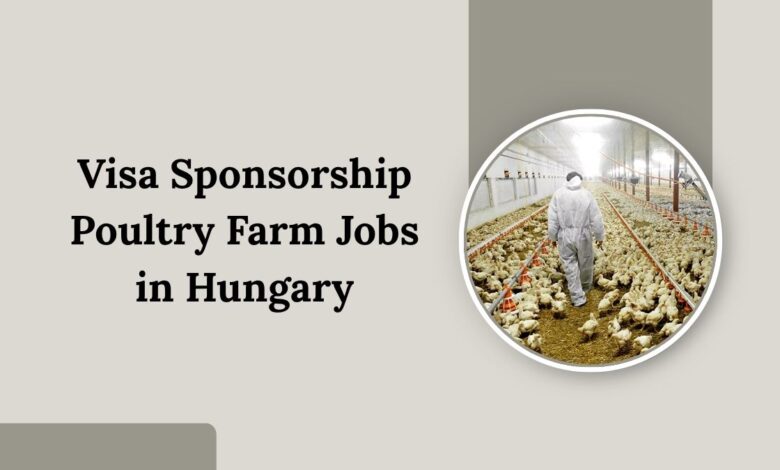

This essay is for you if you’ve been dreaming of working in Europe but feel that the door is always barred for individuals like you, no degree, no connections, no idea where to begin. With a monthly pay between €1,000 and €1,600, poultry farm positions with visa sponsorship are among the most feasible chances available in 2026. Hungary is quietly emerging as one of the most accessible entry points into Europe for agricultural laborers.
Let’s be honest and straightforward about everything, including what the job truly entails, how to apply, and what you may reasonably anticipate after landing it.
Key Points:
- Job Position: Poultry Farm Jobs
- Job Type: Full Time
- Salary: €1,000 to €1,600 per month
- Country: Hungary
Why Hungary? Why Poultry Farming?
Hungary isn’t the most glamorous nation in Europe, but that’s part of what makes it a secret treasure for foreign workers. It is located in the center of Central Europe, is a full member of the European Union, and has a developing economy that actually needs workers.
Hungary’s rural areas are primarily based on agriculture. Poultry, pigs, sheep, and cattle make up the majority of the livestock produced on about 60% of Hungarian farms. Large-scale chicken farming is supported by the nation’s infrastructure, climate, and land, but it requires labor to continue.
The issue? There are just not enough locals in Hungary who are willing to do these positions. For many years, labor shortages have been a significant problem. Approximately 104,600 foreign workers were employed in Hungary in 2025 alone, and one of the primary industries that most needed these people was agriculture. In particular, poultry farming is physically taxing and frequently found in rural locations, which makes it less appealing to urban Hungarians but highly tempting to diligent foreigners who are prepared to create a solid, steady living in Europe.
In summary, the government of Hungary has established legal avenues for the importation of foreign workers, including visa sponsorship schemes, because the country has employment but is unable to fill them locally.
What Exactly Does a Poultry Farm Worker Do?
Let’s be honest about what this job entails before you get too thrilled. It’s not glamorous to raise chickens. It involves physical labor, early mornings, and perhaps uncomfortable surroundings. However, it’s reliable, honest employment, and for thousands of people worldwide, it’s the first step toward a better life in Europe.
An average day on a poultry farm in Hungary looks like this:
- Daily Feeding and Watering: It will be your duty to ensure that the birds are fed and always have access to clean water. Larger farms benefit from automated systems, but you still have to keep an eye on and maintain them.
- Egg Collection and Inspection: On egg-laying farms, you will gather eggs several times a day, check them for irregularities or cracks, clean them, and get them ready for packing and transportation.
- Cleaning and Disinfecting: In chicken husbandry, cleaning and disinfection hygiene are crucial. Poultry houses, cages, nesting spaces, and equipment will be routinely cleaned and disinfected. Disease control depends on this; it cannot be compromised.
- Health Monitoring You will closely monitor the birds, keeping an eye out for any indications of disease, stress, or damage. You report anything that seems odd right away. Additionally, you might aid with immunization practices, such as adding vaccinations to drinking water or supporting inoculation schedules.
- Record Keeping: Good farms maintain thorough records of mortality, growth rates, feed consumption, and egg output. You will be required to report data to supervisors and keep basic logs.
- Support for Farm Maintenance: You’ll assist with general farm facility maintenance, including resolving small equipment problems, alerting maintenance personnel to more serious issues, and ensuring daily operations go without a hitch.
- It’s not a desk job: However, it’s structured, meaningful work, and most businesses offer comprehensive on-the-job training right away.
Salary:
Everyone wants an answer to this topic, so let’s tackle it head-on.
In Hungary, a chicken farmer typically makes around HUF 3,875,689 annually, or about HUF 1,863 per hour. Practically speaking, the majority of foreign entry-level and mid-level employees make between HUF 290,000 and HUF 420,000 gross per month.
Hungary’s minimum wage rose by 13% to HUF 328,600 gross per month as of January 1, 2026. This is significant since payment at or above this amount is mandatory for all legitimate employers in Hungary.
Beyond merely the base pay, the following factors make the compensation package appealing:
- Accommodations: Free or significantly subsidized lodging is sometimes available on or close to chicken farms. Your living expenses are significantly reduced as a result.
- Meals: Some farms offer access to canteens or meals.
- Health Insurance: You are protected by the Hungarian social security system, which covers healthcare, if you are a legally employed worker in Hungary.
- Overtime Pay: Seasonal peak times are common in agriculture, and overtime is usually paid.
- Paid Annual Leave: All employees are required by Hungarian labor legislation to take paid time off.
In comparison to what you would make doing a comparable job in many other nations, the effective purchasing power of your wage is fairly decent when you take into account free accommodation and the comparatively cheap cost of living in rural Hungary.
Check Also: Poultry Farm Jobs in USA with Visa Sponsor
Visa Sponsorship:
“Visa sponsorship” may sound difficult, but to put it simply, it implies that your employer will support your application for a work visa. For you to be able to live and work in Hungary lawfully, they handle the heavy lifting on the Hungarian side.
This is the sole legal route for non-EU/EEA nationals to work in Hungary. You cannot just show up as a visitor and begin working; it is against the law and will result in your deportation. The entire process is made lawful, secure, and long-lasting via visa sponsorship.
This is how the procedure usually operates:
- Step 1: Find a Job Offer
- Before anything else, you must have a valid work offer from a registered Hungarian employer. A recruitment agency, direct applications, or official EU job portals like EURES can all be used for this.
- Step 2: Labor Market Test
- First, your Hungarian company must prove that no local Hungarian or EU/EEA citizen can fill the role. They promote the position domestically, register it at the local labor office, and are only allowed to hire a foreign worker after passing this test.
- Step 3: Document Preparation
- A current passport, your employment contract or legally binding job offer, evidence of any pertinent qualifications, and basic identification documents are all required. The employer concurrently manages their portion of the paperwork.
- Step 4: Visa Application
- You apply for a work visa at the Hungarian embassy or consulate that is closest to you. Hungary grants a single permit that encompasses both the right to live and the right to work.
- Step 5: Processing and Approval
- Usually, processing takes 30 to 60 days. Keep in touch with your company during this time, and avoid making any significant trip arrangements.
- Step 6: Travel and Arrival
- After being accepted, you take a plane to Hungary to start your new career. Typically, the permit is good for a year and can be renewed as long as you are still employed.
It’s crucial to remember that work licenses in Hungary vary depending on the employer. You usually have to go through a fresh application process if you move employers. Make appropriate plans.
Hungary’s 2026 Guest Worker Policy – What You Need to Know
Hungarian workers are the priority when it comes to immigration. Since January 2025, the government has maintained a 35,000 guest worker quota for 2026, and the regulations governing which nations are permitted to send workers have become increasingly stringent.
The good news for agricultural workers in particular, though, is that the agricultural industry has received different treatment than other businesses. Farmers are still able to hire qualified workers from other countries who meet the requirements for seasonal guest worker residency permits.
Georgia, Armenia, and other nations specified in the official government decree are currently eligible for employment-based residence permits in Hungary (after 2025). It is crucial to confirm your eligibility with the Hungarian embassy in your country before applying, as the list has shrunk in comparison to prior years.
Additionally, foreign workers employed in investments with top national economic objectives and those with university degrees and comparable credentials are subject to fewer restrictions.
The main conclusion is that, in terms of attracting foreign labor, agriculture is still more accessible than manufacturing or hospitality. Your prospects are higher than in many other industries if you’re especially looking for a job on poultry farms.
Who Can Apply? Requirements and Eligibility:
The appeal of employment on chicken farms is that the prerequisites are surprisingly reasonable. A university degree is not required. Years of experience are not necessary. All you have to do is be prepared to put in a lot of effort and fulfill certain prerequisites.
What most employers want is as follows:
- Age: 21 years of age or older, while some roles accept candidates as young as 18.
- Physical Fitness: You must be able to perform physically taxing tasks in a variety of weather situations.
- Basic Education: Most jobs only require a high school diploma, while many farms don’t even require this.
- Communication: Some farms have multilingual managers or translators on staff; basic English or German is beneficial.
- Work ethic: the ability to work on the weekends, early in the morning, and on a flexible schedule when necessary due to seasonal need
- No Serious Criminal History: Requirements for standard background checks
- A valid passport must be valid for the minimum amount of time you plan to remain.
Although it is rarely a formal necessity, prior experience in agriculture, animal husbandry, or farm work is an advantage. Farms usually start from zero when hiring new employees, and they favor dependable and consistent workers over those with strong resumes but bad work habits.
Types of Poultry Farm Jobs:
Not every job on a chicken farm entails the same duties. The roles you may discover are broken down as follows:
- General Farm Laborer / Poultry Worker: Poultry Worker/General Farm Laborer the most typical entry-level position. You are in charge of cleaning, feeding, collecting eggs, and keeping an eye on the birds. Ideal for new farm laborers.
- Egg Packing and Processing Worker: Worker Packing and Processing Eggs concentrated on post-collection tasks, such as grading, cleaning, sorting, and packing eggs for delivery. Typically housed in a covered building.
- Hatchery Worker: A hatchery worker keeps an eye on temperature, humidity, egg turning, and chick sorting while working in the incubation and hatching unit.
- Supervisor of a poultry farm and team leader: an advancement from a general worker. entails managing a crew, keeping records, and liaising with farm management; it calls for some experience.
- Farm Maintenance Technician: A farm maintenance technician is responsible for all mechanical and facility maintenance, including feeding equipment and ventilation system repairs.
- Veterinary or Health Assistant: A veterinary or health assistant helps farm managers or on-site veterinarians with disease surveillance, immunization schedules, and maintaining medical records.
Poultry Factory and Farm Jobs in Hungary with Work Permit:
Hungary’s poultry sector is expanding gradually due to export operations and the rising food production needs. Due to this expansion, there are now plenty of prospects for farm and poultry factory jobs in Hungary with support for work permits, particularly for international workers seeking steady employment in Europe.
These positions are accessible in processing factories as well as on farms. While factory jobs concentrate on processing, packing, and quality control, farm jobs typically involve poultry care, feeding, cleaning, and upholding hygienic standards. Due to persistent labor shortages, many firms grant legal work permits to qualified foreign applicants.
Foreign Workers Poultry Jobs in Hungary No Experience Required:
The fact that many jobs in this industry are open to novices is one of its most alluring features. The abundance of experience-free poultry employment in Hungary makes it simpler for unskilled candidates to break into the European labor market.
The majority of businesses provide basic on-site training so that employees may pick up skills like handling chickens, cleaning workspaces, sorting goods, and assisting production lines quickly. Physical fitness, dependability, and the capacity to correctly follow directions are the primary prerequisites. Because of this, poultry employment is a viable choice for people looking for their first career abroad.
Hungary Farm Jobs with Visa Sponsorship for Asians:
To close labor shortages in the agriculture sector, Hungary is progressively employing laborers from Asian nations. Numerous businesses provide Asians with farm jobs in Hungary with sponsored visas, enabling them to lawfully reside and work there.
Work permit processing, employment contracts, and documentation assistance are usually included in visa sponsorship. Asian laborers are frequently found in processing facilities, poultry farms, and general agricultural labor positions. For people seeking long-term employment prospects abroad, these positions offer a reliable entrance point into Europe.
Entry Level Poultry Farm Jobs Hungary Recruitment Agencies:
In Hungary, recruitment firms are crucial in linking foreign workers with companies. Recruitment firms in Hungary help individuals locate validated job offers and support the hiring process for a large number of entry-level poultry farm positions.
These organizations typically take care of interview scheduling, job matching, and assistance with visa paperwork. Poultry caretakers, cleaners, packing assistants, and general farm workers are examples of entry-level positions. One of the simplest and safest ways for many international workers to get work in Hungary’s poultry business is to use a reputable recruitment agency.
Benefits of Poultry Farm Jobs:
- Easy Entry for Novices: The majority of occupations on chicken farms don’t call for advanced training or specialized knowledge, which makes them perfect for inexperienced workers and new hires.
- Stable Monthly Income: Employees are paid on a regular basis and have the option to increase their income by working overtime.
- High Job Demand: Because poultry farms are open all year round, there is a steady need for workers in various areas.
- Opportunities for Visa Sponsorship: A lot of farms, particularly in Europe, use foreign labor and assist with work visa procedures.
- Accommodation Support: To help employees save money on living expenses, some firms offer free or reasonably priced housing.
- No Formal Education Required: Prior academic credentials are not required because basic training is typically provided on the job.
- Skill Development: Employees have practical experience in teamwork, hygiene management, and animal care.
- Overtime Earnings: Working longer hours during periods of high production raises total monthly earnings.
- Opportunities for International Employment: These positions frequently provide access to employment overseas in nations experiencing a labor shortage in agriculture.
- Simple Work Tasks: New hires can easily adjust to their jobs because they are typically simple.
Where to Find These Jobs:
It takes considerable investigation to find legal, visa-sponsored positions on poultry farms in Hungary. The greatest locations to start are as follows:
- EURES (European Employment Services): Perhaps the safest place to start is this official EU job portal. The employers listed here are verified, and the job postings frequently include information about the availability of visa sponsorship. Go to eures.ec.europa.eu and select Hungary and agriculture.
- Hungarian Agricultural Recruitment Agencies: Hungarian Agricultural Recruitment Organizations, such as Moving2Europe (M2S Group), are experts at assigning foreign laborers to Hungarian farms. They help with documentation, the application procedure, and even post-arrival assistance.
- LinkedIn: You can find advertisements from both direct employers and agencies by searching for “poultry farm worker Hungary visa sponsorship 2026” on LinkedIn. Before applying, be thorough and verify the company’s validity.
- Hungarian Farm Employer Websites: Websites for Hungarian farm employers’ jobs are posted directly on the websites of some major Hungarian poultry producers. Foreign workers are sometimes hired by area agricultural cooperatives and companies such as PICK Szeged.
- Community Groups and Word of Mouth: Reach out to those you know who are already employed in Hungary or Central Europe. Job leads and agency connections are frequently shared by online forums on Facebook and WhatsApp.
- Warning: Be wary of employment offers that demand payment up front. You are not required to pay fees in order to get hired for legitimate visa-sponsored jobs. It’s a fraud if someone asks you for money to “secure your spot,” so leave.
Life in Hungary as a Farm Worker – What to Expect
Since relocating to a new nation is never simple, let’s discuss what life is like once you get there.
- Cost of Living: In comparison to Western Europe, Hungary has a comparatively cheap cost of living. Your expenses are significantly lower if your company provides housing, which is typical for positions on farms. On a farm worker’s pay, groceries, local transportation, and daily expenses are all rather affordable.
- Language: One of the hardest languages in the world to learn is Hungarian. In rural farm settings, most foreign workers can get by with English or simple gestures, so don’t stress about becoming fluent. But even picking up 20 or 30 simple Hungarian words will help you connect with your coworkers and the local community.
- Community: Particularly in the first few months, rural Hungary can feel lonely. Maintaining relationships with other foreign workers in the same area or on the same farm is quite beneficial. You’ll probably be surrounded by folks from a variety of nations because many larger farms employ people from other countries.
- Healthcare: You are entitled to Hungary’s public healthcare system if you are a legally employed person. Although there may be language challenges at smaller clinics, it is accessible and functional.
- Transport: Large cities are frequently far from rural fields. Numerous farms offer transportation, or you’ll be close enough to a nearby village with minimal amenities. Often, having a bicycle is quite beneficial.
- Pathway Forward: It serves as a stepping stone for many persons who begin on Hungarian farms. They move into better-paying employment, apply for longer-term residency permits, or utilize their EU work experience to qualify for jobs in other EU countries after establishing a European work history and possibly learning some Hungarian.
How to Apply:
Are you prepared to act? This is a useful road map:
- Get your paperwork ready: a current passport-sized photo, a valid passport, a CV or resume in English, and certificates of basic schooling.
- Compose a brief cover letter: Describe your drive, your readiness to put in a lot of effort, and your availability. Be direct and honest.
- Apply through legitimate channels: Apply via reputable methods, such as direct employer websites, verified agencies, or EURES. Apply now or stay away from intermediaries that want payment in advance.
- Attend your interview: A lot of farms hold brief phone or video interviews. Emphasize your dependability and be truthful about your experience—or lack thereof.
- Await the employment offer; after it is made, thoroughly go over the contract. Verify that the accommodations, pay, and working conditions are specified in detail.
- Apply for your visa: Your employer will assist you with the visa application procedure. Bring your documentation to the Hungarian embassy in your nation.
- Travel and get there; don’t leave your existing position until your visa has been granted. Keep in touch with your employer as soon as you arrive.
Frequently Asked Questions:
-
What types of poultry farm jobs are available in Hungary?
Jobs, including chicken caretakers, egg collectors, farm laborers, cleaners, feeding assistants, and packagers, are available in Hungary’s poultry farms. Depending on the needs of the farm, both skilled and unskilled occupations are available.
-
What is the salary for poultry farm jobs in Hungary?
In Hungary, the average monthly salary for workers on poultry farms ranges from €1,000 to €1,600, depending on their expertise, hours worked, and company perks like bonuses or overtime.
-
What are the working conditions like on poultry farms?
Physical labor-intensive tasks include handling animals, cleaning sheds, standing for extended periods of time, and upholding hygienic standards. Typically, employers offer basic equipment and safety training.