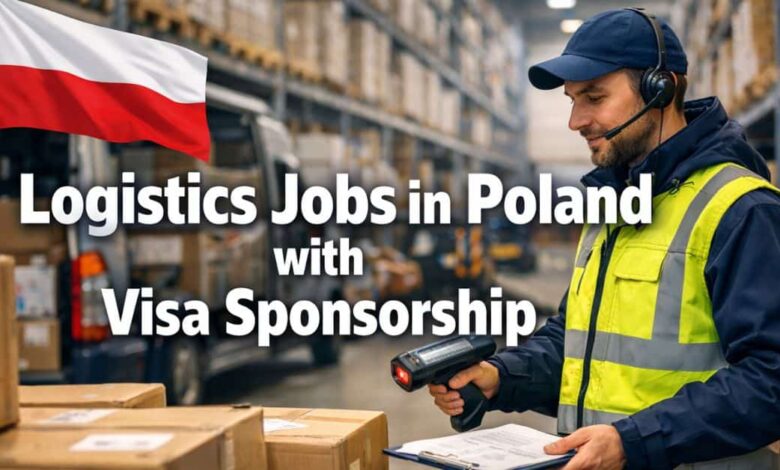

Poland’s logistics sector in 2026 offers monthly salaries ranging from PLN 4,500 to PLN 6,000, with entry-level warehouse roles starting around PLN 3,200 and mid-level coordination roles reaching PLN 6,000+ depending on experience. Most positions require no prior experience for entry roles, while specialized jobs like forklift operators or transport coordinators may require certification.
These are primarily on-site, physical roles based in warehouses, distribution centers, and transport hubs, with full-time and permanent contracts commonly available. Visa sponsorship is offered by licensed employers for eligible foreign workers.
Job Details:
| Job Country | Poland |
| Job Title | Logistics jobs |
| Who can Apply | All Nationalities |
| Education Minimum | Not Required |
| Experience Minimum | Not Required |
| Benefits | High Salary, Permanent Job |
| Visa Sponsorship | Yes Provides |
| Minimum Salary | PLN 4,500 to PLN 6,000 per month |
Requirements:
Before obtaining a logistics position in Poland as of 2026, a foreign national must meet the eligibility requirements set forth by Polish immigration, labor, and industry authorities.
- 18 years old is the minimum age.
- A genuine passport that is still valid.
- pertinent logistics, logistics-related logistics, or expertise in warehousing.
- Proficiency in either Polish or English is required.
- negative criminal history check.
- certificate of medical fitness (if required).
- ability to utilize basic equipment safely.
- Confirmed work against a Polish employer with a license.
- compliance with Polish immigration and work permit regulations.
Additional training, licenses, or certifications may be required for some of their positions, such as warehouse team leader, transport coordinator, and forklift driver.
Check Also: Dishwasher Jobs in Switzerland with Visa Sponsorship
Required Documents:
Along with the Polish work visa procedure, the following documents must be used to support the job application:
- valid passports and copies of them.
- photos that are current (passport size).
- updated resume that includes a summary of the logistics experience.
- credentials related to education or job training.
- letters of prior experience from various employers.
- Professional licenses (such as a forklift license, if applicable)
- card of police clearance.
- Report on medical fitness
- Completed Poland work visa application paperwork.
- Proof of accommodations for those in need.
Before being submitted, all documents that don’t contain Polish or English should be validated and translated.
Type of Logistics Jobs in Poland:
Logistics jobs may include distribution, transportation, warehousing, and delivery chains. Typical positions include:
- An employee in warehouse logistics oversees the transportation, storage, and reference of goods inside warehouse facilities.
- Pallets are loaded and unloaded in designated areas by forklift operators, who use forklifts and other lifting equipment.
- A specialist in inventory control measures stock, counts cycles, resolves inconsistencies, and modifies inventory systems.
- A shipping and receiving clerk assists with loading operations, arranges incoming and outgoing items, and indicates paperwork.
- The transport coordinator plans and coordinates the movement of freight and gives drivers the information they need to deliver on schedule.
- A logistics assistant helps with day-to-day tasks like documentation, order selecting, packing, and inventory reporting.
- Entry/Mid Level Supply Chain Analyst: Analyzes supply chain performance, creates reports, and makes recommendations for process improvements.
- Dispatcher/Fleet Support Staff: Assigns route schedules, finds and facilitates driver communication, and replenishes shipments in real time.
Job Roles and Duties:
Foreign logistics workers in Poland engage in a variety of operations and support tasks. These could consist of:
- accepting and inspecting items that have been received internally.
- organizing and storing products.
- the importance of safety when using warehouse equipment.
- putting together shipments for shipping.
- keeping track of inventory updates and controls.
- assisting with stock reconciliation and cycle counting.
- corresponding with suppliers, warehouses, and drivers.
- completing labels and transportation paperwork.
- supporting constant adherence to health and safety regulations.
- Everything pertaining to informing supervisors of issues or discrepancies.
Poland’s logistics workplaces prioritize efficiency, accuracy, and safety, and they require cooperation and reliability amongst shifts.
How to Apply For Logistics Jobs in Poland with Visa Sponsorship?
A step-by-step application strategy for finding logistics jobs in Poland with a sponsored visa is provided below:
Step 1: Licensed employers are searched
Find the list of distribution partners, freight forwarders, warehousing companies, and logistics organizations that are legally permitted to support the employment of foreign workers in Poland. Employers with structured recruitment processes and a track record of hiring overseas talent should be distinguished.
Step 2: Prepare Full Documentation
Collect the required paperwork, ensuring that it is accurate and professional. Offer translated versions of English and non-Polish materials.
Step 3: Proceed with Job Application
To apply for a job, use respectable online job boards, trustworthy recruitment firms, or official company websites. Include information about your logistical skills, device licenses, language ability, and preparedness to immigrate under the sponsorship of a visa in your CV and cover letter.
Step 4: Went for Interview
Participate in interviews via the phone, on video, or in person. Employers are able to assess candidates’ communication skills, practical logistics assignment knowledge, and willingness to follow safety procedures. Short skill assessments or demonstrations may be required for some tasks.
Step 5: Accept an Employment Proposal
Successful applicants will receive a signed employment contract or job offer that includes the job title, pay, hours worked, job description, benefits, and the employer’s commitment to sponsoring the applicant’s work permit and visa.
Step 6: Employer applies for a Work Permit
The company applies for a work permit on your behalf with Polish labor and immigration authorities once you sign the contract. With this certificate, you may be sure that your employer has the legal right to lift and sponsor you as a foreign worker.
Step 7: Candidate Applies Visa to work
The candidate applies for a Poland work visa at the nearest Polish embassy or consulate after being granted authorization. Together with the completed visa application forms, provide all supporting documentation.
Step 8: Final Medical and Security Inspections
To conduct business with Poles, you must pass the required security background checks and medical examinations. These will ensure that the personality and health standards are met.
Step 9: Visa approval and Travel arrangements
Accept formal entrance paperwork and begin making travel plans to Poland as soon as the visa is approved. dates of arrival, help with moving, and on-demand lodging.
Step 10: Arrival and Commencement of Employment
Complete all registration requirements upon arrival, then begin working on your logistics assignment in accordance with your employment contract and Polish labor rules.
Salary Expectations:
However, as of 2026, Poland’s logistics employment pays competitively, depending on industry, occupation, and expertise. Forklift operators and shipment clerks can make PLN 4,000 or PLN 5,500 per month, while first-level employees in warehouse logistics are likely to make between PLN 3,200 and PLN 4,500. The median monthly salary for middle-level jobs, such as transport coordinators or inventory specialists, might range from PLN 4,500 to 6,000, depending on the employer’s size and degree of responsibility.
Conditions of Work and Rights of the Employee:
Logistics workers in Poland are protected by national labor laws concerning their rights, safety, and employment conditions. Important safeguards consist of:
- Employment contracts legally stipulate wages and perks.
- fulfilling Poland’s minimum wage requirements.
- Controlled overtime schedules and overtime compensation.
- unlawful dismissal or coverage for discrimination.
- coverage for occupational injuries.
Employers are responsible for providing a safe workplace, training employees, and maintaining the labor safety regulations that are anticipated throughout warehouse and logistics operations.
Benefits:
- Competitive Salaries: Monthly wages from PLN 3,200 up to PLN 6,000 depending on role and experience.
- Visa Sponsorship: Legal employment and work permits supported by licensed employers.
- Stable Full-Time Work: Permanent contracts with clearly defined duties and hours.
- Labor Protections: Rights to minimum wage, overtime pay, workplace safety, and protection against unfair dismissal.
- Professional Experience: Exposure to European supply chain operations, enhancing career growth.
- Training & Development: Opportunities to gain certifications, operate machinery, and advance in logistics roles.
- Cost of Living Advantage: Earnings often provide a comfortable standard of living relative to expenses in Poland.
Useful Tips for Applicants:
- Put a focus on logistics and warehouse operations in your professional resume.
- List any intriguing equipment certifications or licenses.
- translating texts into Polish or English when requested.
- Applications should only be submitted by approved agencies or companies.
- answers pertaining to logistical scenarios from the practice interviews.
- Consult the employment agreement for details on visa sponsorship.
- Keep the identity documents and passport.
- Study the history of immigration and labor in Poland.
- Possess physical preparedness for logistics work operations.
- Throughout the onboarding process, pay close attention to the employer’s instructions.
Reasons for Visa Rejection:
- a complete or partial absence of records.
- The work visas cannot be sponsored by the employer.
- passports that are spoiled or counterfeit.
- Medical tests have not been successful.
- Problems with criminal histories
- The wrong visa category was applied.
- insufficient warehouse and logistics expertise.
- documents that are not certified or translated.
- failure to timely provide required documentation.
- the peculiarities of the employment contracts’ specifics.
Top Websites:
Conclusion:
Poland’s expanding logistics sector in 2026 offers competitive salaries, visa sponsorship, and stable full-time roles for foreign workers across major cities like Warsaw and Wrocław. With accessible entry requirements, structured work permits, and strong labor protections, it presents a practical gateway into Europe’s supply chain industry. For prepared applicants with the right documents and mindset, Poland isn’t just a job destination it’s a long-term career opportunity.
Frequently Asked Questions:
What types of logistics jobs are available in Poland?
Roles include warehouse worker, forklift operator, inventory control specialist, shipping/receiving clerk, transport coordinator, logistics assistant, supply chain analyst, and dispatcher/fleet support staff.
Do I need prior experience to apply?
Entry-level roles typically do not require prior experience, though specialized positions like forklift operator or team leader may need certifications or relevant training.
Can foreigners get visa sponsorship?
Yes, licensed Polish employers can sponsor work visas for eligible foreign workers, allowing legal employment in the logistics sector.